

Myth: Setting up a spare parts portal requires complete item information
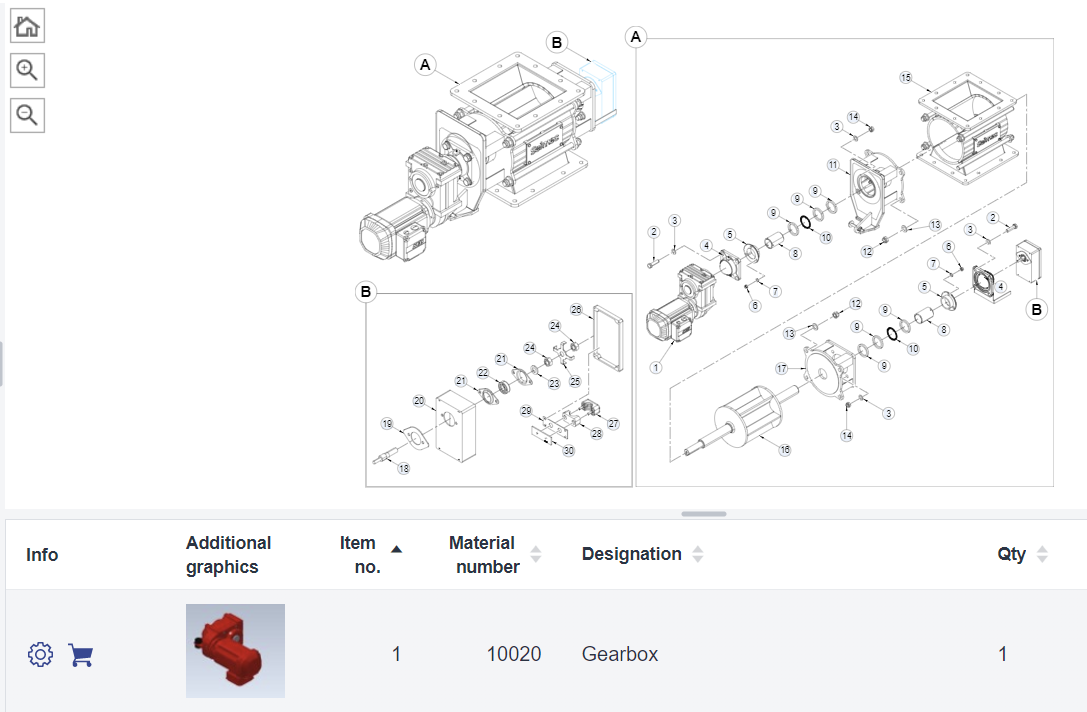
In manufacturing and spare parts management, an accurate and up-to-date product database is important for ensuring smooth operations. Many companies are hesitant to start using digital solutions because their product data is not in perfect condition. In this blog post, we debunk the myth and explain why striving for complete product data is unnecessary when implementing a digital spare parts portal.
Striving for perfect product information unnecessarily delays the implementation of digital solutions. Ensuring the accuracy and completeness of information takes a lot of time and resources. However, in the case of spare parts, for example, information is constantly changing. What is the level of spare parts productisation, which ones are sold as a whole, replacement products from competing suppliers and customers' own modifications to equipment – not to mention normal price and delivery time updates. When approaching the spare parts portal from the customer's perspective, for example, one customer's products at a time, product information can be improved gradually. At the same time, the benefits of the portal can be reaped immediately, which in turn frees up time for the production of subsequent catalogues.
Companies often fear that incorrect information will be visible to customers. The truth is, however, that without digital solutions such as a spare parts portal, this incorrect data is visible to customers and, in the worst case, can lead to incorrect deliveries. The portal helps customers verify the correct part using a visual display, while the up-to-date documentation available on the portal helps them determine the correct part. If the customer is still unsure about the suitability of the part after this, they are much more likely to contact the equipment manufacturer to request confirmation of the part's suitability. At the same time, the equipment manufacturer receives information about product updates if, for some reason, the information has not been passed on from the design stage or the updates have been made by a third party.
The introduction of a spare parts portal creates opportunities for data enrichment. Product information can be improved through interaction with users. If there are still doubts about the completeness of the product information, it is a good idea to make the catalogue available to internal users in the first phase. For example, field service personnel are very pleased to have up-to-date product documentation with assembly instructions on their mobile devices for customer visits. By utilising the team's accumulated knowledge and experience, the digital catalogue becomes a platform for continuous information enrichment and improvement.
A digital spare parts catalogue offers the flexibility to make updates and improvements on an ongoing basis. Instead of postponing implementation while waiting for complete information, you can start with the information available and continuously develop it over time. For example, in our customer projects, we have used a completely new item number series that is visible to end users, while existing items have been harmonised. Through user interaction, users can participate in enriching the data by providing feedback and corrections. This collaborative process ensures a dynamic and evolving product information base, improving its accuracy and timeliness in the long term.
Once the product information has been finalised, the question of the assembly images required for the catalogue often arises. Service Rata is also happy to assist in the production of these images, making the implementation of a spare parts portal easier than ever!